What Is Microneedling, in Plain Terms?
If you have searched for "what is microneedling," the plainest answer is that it is a controlled skin-renewal treatment. A trained provider uses fine, sterile needles to create tiny channels in the skin. Those micro-channels prompt the body's natural repair response, which can stimulate new collagen and elastin. Collagen helps support the skin's structure, while elastin contributes to its ability to stretch and return to place.
People also call microneedling collagen induction therapy. It is minimally invasive, but it is still a medical skin treatment. A qualified provider should do it with sterile tools. The American Academy of Dermatology says providers use it for acne scars, uneven texture, large pores, stretch marks, and fine lines. It is considered suitable for all skin tones when properly performed.
How it differs from microdermabrasion
Microneedling and microdermabrasion are not the same treatment. Microdermabrasion exfoliates the outer surface of the skin without using needles. Microneedling creates controlled channels that reach below the surface, which is why it may address concerns such as some scars and changes in texture. Cleveland Clinic describes this distinction as a difference between surface exfoliation and a needle-based treatment that activates the skin's healing response.
Where microneedling can be used
Most treatments are performed on the face, where people commonly notice fine lines, enlarged pores, uneven texture, or scars. The same basic idea can also be used on the neck, hands, and other areas where skin texture has changed. The treatment area depends on the concern being evaluated and the provider's recommendations, rather than on a one-size-fits-all plan.
At Kenzi, microneedling is listed for the face, neck, and hands. The concerns include wrinkles, stretch marks, scars, discoloration, loose skin, large pores, and fine lines. A consultation can help clarify whether traditional microneedling is appropriate or whether another skin-rejuvenation option better matches the concern.
What Is Microneedling Used For?
Microneedling is used to improve concerns linked to changes in collagen, texture, and pigment. A provider uses fine needles to create controlled micro-injuries, prompting the skin's healing response and supporting new collagen and elastin. The American Academy of Dermatology lists several concerns this treatment may address. Those include acne scars, dark spots, large pores, and melasma. They also include sagging skin, scars, stretch marks, uneven tone, fine lines, and wrinkles. See more about what microneedling treats in Naples.
| Concern | What microneedling is meant to change | What a consult should confirm |
|---|
| Acne scars | The uneven surface and depressed appearance of certain scars by supporting collagen remodeling. | The scar type, whether acne is active, and whether another or combined treatment is more appropriate. |
| Fine lines and wrinkles | Visible lines and early loss of smoothness through changes in skin texture and collagen support. | The depth of the lines, skin condition, and realistic improvement for the area being treated. |
| Large pores and texture | The look of enlarged pores and rough or uneven texture by encouraging a smoother surface. | The underlying cause, sensitivity, and whether microneedling fits the person's skin and goals. |
| Uneven tone | Some discoloration and overall uneven appearance, alongside texture concerns. | What is causing the color change and whether pigment-focused care should come first. |
| Stretch marks | The texture and visibility of stretch marks through collagen induction in the affected skin. | The age, color, location, and extent of the marks, plus the likely scope of improvement. |
Microneedling may also be considered for loose or crepey skin and scars left by surgery or injury. Cleveland Clinic describes tiny openings in the top skin layer. Healing then makes more collagen and elastin. It is not the same as microdermabrasion, which exfoliates the surface without needles. A consultation should identify the concern, treatment area, and any condition that could affect safety or results. Skin history, medications, healing tendencies, and expectations all matter when deciding whether the treatment is appropriate.
Melasma deserves particular care. Dermatologists sometimes treat it with microneedling, but pigment must be evaluated first because the wrong treatment can worsen discoloration. A clinician can help determine whether microneedling or another approach is a better fit, particularly when discoloration is the main concern. If you are comparing options, read about choosing a skin rejuvenation treatment before making a plan.
How Is a Medical Microneedling Visit Different From a Home Device?
When people ask, "what is microneedling," they may be comparing a medical treatment with a roller or pen sold for home use. The difference is not simply the brand of device. Medical microneedling is designed to create controlled punctures in the skin, while home products are not meant to puncture skin in the same way. Using a home device more often or more aggressively can irritate the skin rather than improve it.
The American Academy of Dermatology warns that piercing the skin at home can lead to infection, scarring, and changes in skin color. It may also spread warts or herpes to another area. These concerns matter more if the skin is already inflamed. A history of cold sores raises the risk too. So does pigment that darkens after irritation. the American Academy of Dermatology explains the safety concerns and why professional treatment requires appropriate technique.
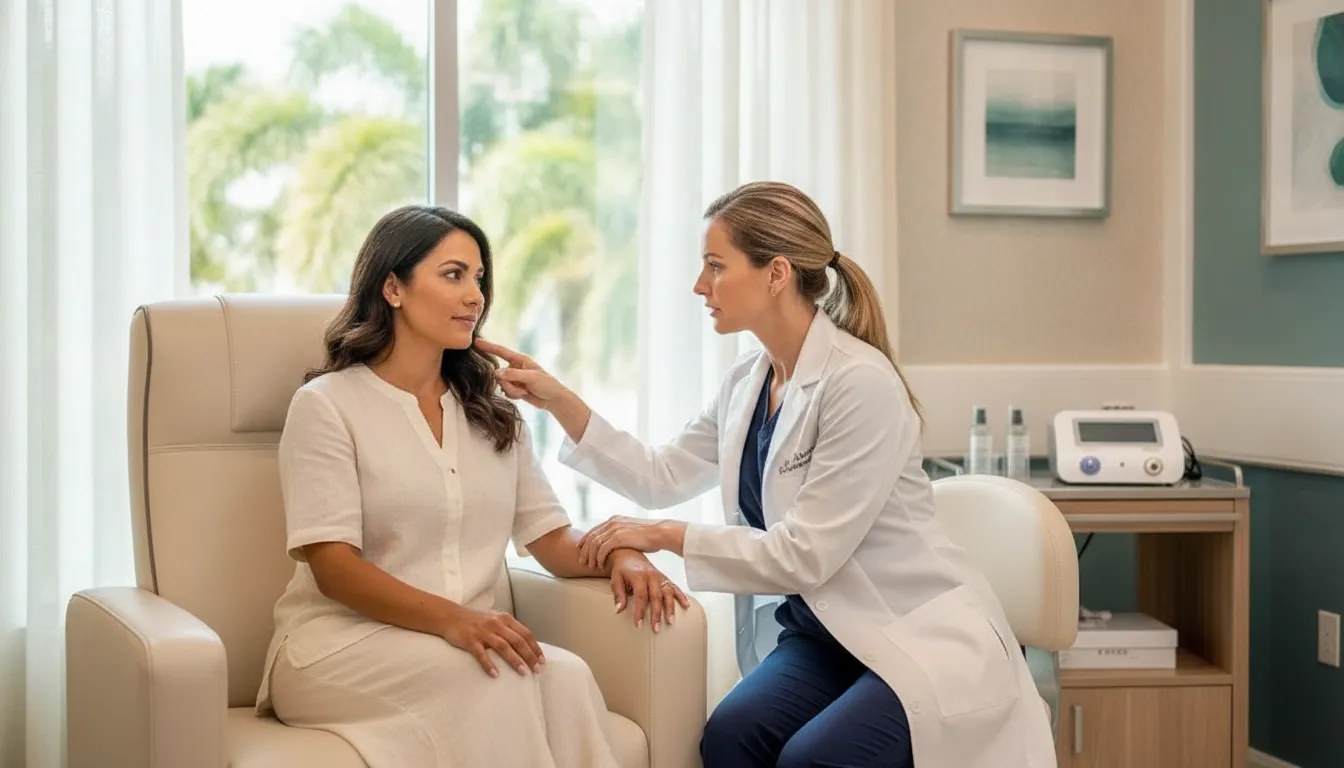
A medical visit starts with a skin check, not a device setting. A trained clinician considers whether the concern is primarily on the surface or may involve deeper changes in texture, scarring, or laxity. They also review skin history and current irritation before choosing whether microneedling is appropriate. The treatment uses a sterile device and a plan matched to the treatment area, intended depth, and the person's skin history.
That clinical planning matters because deeper treatment is not automatically better. The goal is to create a controlled response without adding avoidable injury. A professional can also explain what to expect afterward and identify when redness or irritation needs attention. At a physician-owned practice, the care model includes a clear point of contact if a concern develops. Kenzi was opened in 2017 by Aldene McKenzie D.O., who founded the practice as a physician-owned medical aesthetic center. Learn more about the physician-owned med spa in Naples model.
Before trying a home roller or pen, pause and consider these three checks:
- Identify the concern. Is it limited to the surface, or could it involve deeper scarring, texture, or laxity that needs an assessment?
- Review your skin history. Is the skin inflamed now, or do you have a history of cold sores or pigment change after irritation?
- Plan for complications. Who would evaluate and treat an infection, unexpected color change, prolonged irritation, or scarring if one occurred?
If you are considering professional care, a consultation can help determine whether microneedling fits the concern and your skin history. You can review Kenzi's microneedling treatments in Naples before deciding what questions to bring to that visit.
What Does Microneedling Not Do?
Microneedling is useful because it works with your skin's healing response, not because it replaces every type of aesthetic treatment. Fine needles create controlled micro-injuries that encourage collagen production. That can gradually improve the look and feel of uneven texture, enlarged pores, fine lines, and some scars. It does not change the underlying structure in the same way as an injectable or a surgical procedure.
For example, microneedling does not freeze muscles. Botox works by temporarily reducing the movement of specific muscles, while microneedling is a collagen-stimulation treatment for the skin. It also does not add volume the way a dermal filler does. Lost fullness in the lips or cheeks is a volume problem. New collagen in the skin does not replace that volume.
Microneedling is not a fat-removal treatment, either. It is not intended to remove pockets of fat or create the same type of contouring effect as a body treatment. It is also not a face-lift. While it may support smoother-looking skin and some improvement in the appearance of laxity, it does not surgically lift or reposition tissue.
These limits also matter when you think about timing. Microneedling is not usually a one-visit cure. Results build over the following weeks as the skin produces and remodels collagen, and multiple visits are common. The American Society for Dermatologic Surgery says a series of at least three monthly visits is often used. Downtime can last about 2 to 7 days. Your plan may differ depending on your skin, the area treated, and the concern being addressed.
Standard microneedling should also be distinguished from radiofrequency microneedling. The radiofrequency approach adds heat through the needles, so it is a different treatment rather than simply a stronger version of the same procedure. If you are weighing the two options, read about microneedling versus RF microneedling. Kenzi can help you choose between standard collagen induction and a radiofrequency option. That visit can also point you to other skin and body treatments.
Which Questions Should You Ask Before Microneedling?
A definition only helps if you can use it in the room. These are the questions that turn "what is microneedling" into a decision about your own skin.
Is this concern actually a collagen problem?
Microneedling is built for texture. Depressed acne scars, rough patches, large-looking pores, and fine lines are the usual reasons a provider brings it up. A dark spot that is flat, a muscle line that only shows when you frown, or a hollow under the eye is a different problem. Ask the clinician to name the concern in plain words before they name a device.
What would make you wait?
Active acne, a current skin infection, a fresh tan, or a history of cold sores on the treatment area are reasons to pause. So is a recent isotretinoin course or a pigment problem that flares every time the skin is irritated. You do not need to diagnose yourself. You do need to say these things out loud so the plan can change.
How will you know it worked?
Collagen remodeling is slow. The American Academy of Dermatology frames the result as less noticeable scars and wrinkles and a more even surface, not a new face overnight. A useful consult sets a photo point, a likely number of visits, and the change you should be able to see in the mirror. If the only promise is "you will love it," ask for a more specific goal.
Who is holding the device?
Depth, needle condition, and skin prep decide whether the same treatment helps or harms. At Kenzi MedSpa and Wellness Center, injectors and device treatments sit under physician oversight. Aldene McKenzie D.O opened the practice in 2017. She is a Board Certified Physician in Family Medicine by the American Osteopathic Board of Family Medicine and Osteopathic Manipulative Therapy. With a focus in Aesthetic Medicine and Hospital Medicine. Ask who performs the treatment and who you call if redness lasts longer than expected.
If you are still comparing skin options, the anti-aging treatments guide for Naples shows where collagen induction sits next to other non-surgical choices. It is a map, not a menu you have to order from.
Frequently Asked Questions
Does microneedling hurt?
Most patients feel pressure, vibration, or a prickling sensation rather than sharp pain. A topical anesthetic is commonly used before treatment, which can make the procedure more comfortable. Your provider can discuss comfort concerns and whether microneedling is appropriate for your skin.
What is the downside of microneedling?
Temporary redness, swelling, tenderness, bruising, or flaking can occur afterward. The American Society for Dermatologic Surgery notes that less common concerns include scarring or a reaction to a topical anesthetic. Active acne may also be a reason to postpone treatment.
How long do microneedling results last?
Results develop gradually as the skin produces new collagen, so improvements may take a few weeks to appear. Kenzi's service notes say results can last up to six months. How long they last still depends on your skin, the concern, and the plan.
What is the difference between Botox and microneedling?
Microneedling creates controlled micro-injuries that stimulate collagen and may improve texture, fine lines, scars, pores, discoloration, and stretch marks. Botox is an injectable treatment that works by temporarily reducing muscle activity. They address different concerns, so a consultation can help determine which approach fits your goals.
Ask Whether Microneedling Fits Your Skin
If you now know what is microneedling and want a personal answer, the next step is a visit, not a device search. A clinician can look at scars, lines, pores, and pigment and say whether collagen induction therapy belongs in the plan.
Book a microneedling consultation at Kenzi MedSpa and Wellness Center in Naples, or call (239) 544-5369.


 Aldene McKenzie, D.O.