How many units of Botox for forehead lines does the label use?
BOTOX Cosmetic (onabotulinumtoxinA) is approved to temporarily improve moderate to severe forehead lines tied to frontalis activity in adults. The DailyMed prescribing information, updated October 18, 2024, is the source for the doses below.
For forehead lines, the label recommends 0.1 mL (4 units) into each of 5 forehead sites. That is 20 units in the forehead. It also places 0.1 mL (4 units) into each of 5 glabellar sites. That is another 20 units between the brows. The recommended total for that paired treatment is 40 units.
The glabella is the frown complex between the eyebrows, mainly the corrugator and procerus muscles. The label pairs those injections with the forehead dose. Treating the horizontal lines alone is not the regimen described for this indication.
| Area in the labeled regimen. | What it targets. | Labeled dose. |
|---|
| Forehead lines. | Horizontal lines from frontalis activity. | 20 units across 5 sites. |
| Glabellar lines. | Frown lines between the brows. | 20 units across 5 sites. |
| Paired forehead treatment. | Forehead lines plus glabellar lines. | 40 units total. |
Those figures are the studied recommendation, not a promise that every face receives them. A clinician can use a different pattern when anatomy or goals call for it. Units from another neuromodulator brand are not interchangeable with Botox units. Do not convert a forehead quote across brands on your own.
Why can forehead Botox units differ from 20?
Twenty units is a reference point for the horizontal lines, not a score for a better result. A stronger frontalis muscle, a very high hairline, or deep etched lines can lead to a different map. A lighter plan is common when the goal is to keep brow movement and facial expression.
The frontalis is the only muscle that lifts the brows. If it is relaxed too evenly, the brows can feel heavy, especially when the frown muscles are still strong. That is one reason the label treats the forehead and the glabella together. Balance matters more than hitting a round number.
Men often have larger facial muscles, so some plans use more product. That is a clinical judgment, not a rule you can apply from a chart. Prior treatment also matters. If a past map left the center smooth and the tails moving, the next visit may shift sites rather than simply add units.
- Brow height, and whether the brows already sit low.
- How strongly the forehead lifts when you raise your brows.
- Whether frown lines need treatment in the same visit.
- Static creases that remain when the face is at rest.
- The amount of movement you want to keep.
Forehead lines are one concern on the Botox treatment page, next to frown lines and crow's feet. Crow's feet dosing is a separate labeled regimen and is not part of the 20-unit forehead figure.
How many units of Botox for forehead treatment should you expect to discuss?
Bring the question in plain language. Ask how many units are planned for the forehead, how many are planned between the brows, and why those sites were chosen. A useful answer names muscles and goals. It does not stop at a single total.
You can also ask what would change the count. Examples include a heavy brow, a wedding or photo in the next two weeks, or a wish to keep more lift at the outer brow. Those details belong in the consult, before a syringe is opened.
Kenzi does not publish one forehead package, because the map is set in person. Pricing questions, including what a unit costs in Naples, belong on the cost guide rather than in a dosing article. Duration questions, including when a forehead result fades, belong on the duration guide.
- Describe the lines you notice and when they show, at rest or only with expression.
- Say whether brow position or a natural look matters more than a fully smooth forehead.
- Ask for the forehead units and the glabellar units as separate numbers.
- Ask which result would lead the clinician to use fewer sites next time.
- Confirm follow-up timing before you decide.
If you want the wider visit sequence, read the physician-led Botox consultation guide. It covers screening and what the appointment feels like. It does not replace this unit discussion.
What should forehead units not be asked to do?
Units do not erase every forehead crease. Botox relaxes the muscle that folds the skin. Lines that remain when you are not raising your brows may soften, but they may not vanish. Skin texture, sun damage, and volume loss are different problems. If a crease is still there at rest, the next topic may be skin quality rather than a higher unit count.
More units are not a shortcut to a longer result. How long a treatment remains visible is its own topic, covered in how long Botox lasts for Naples patients. Adding product only to chase extra weeks can leave the brow flat.
Units are also not a price estimate. Two people with the same forehead count can have different visit totals if the frown area, crow's feet, or a membership term is included. For how Naples quotes are built, see how much Botox costs in Naples.
Do not stack doses from a chart you found online. The prescribing information also warns that toxin effects can spread beyond the injection area. Dosing and site choice are medical decisions. This article is education, not instructions to self-treat.
How should you read a forehead unit quote?
A quote that says only "forehead Botox" is hard to compare. Ask the practice to split the number into forehead sites and frown sites. Ask whether the outer brow is included. Ask whether the figure is the labeled 20-unit forehead dose, a lighter map, or a full upper-face plan.
Write the answer down in three lines: forehead units, glabellar units, and any other area. If a second office gives you one blended total, you cannot tell whether you are buying the same map. The comparison that matters is the pattern of sites, not the biggest number on the page.
Also ask what "natural" means in that office. For some people it means a smooth forehead at rest with a small lift when they look surprised. For others it means visible movement across the whole frontalis. Those goals do not use the same sites, even when both plans mention about 20 units.
If you have had brow heaviness before, say so at the start of the visit. A careful plan may leave a little movement low on the forehead so the brow can still lift. Chasing a perfectly still forehead is a common reason people dislike an otherwise reasonable unit count.
Bring a makeup-free photo of your forehead at rest and one with your brows raised. The pair shows which lines are dynamic. Dynamic lines are the ones a muscle-relaxing treatment is built to soften. Lines that look the same in both photos may need a different conversation than more units.
People often arrive with a number from a friend or a video. Treat that number as a story about someone else's muscle, not as your dose. Forehead width, brow height, and how hard you lift the brows are visible only in person. Two patients can both "get the forehead done" and leave with different maps for sound reasons.
Ask how the plan would change if the result feels too still at two weeks. A clinic that can describe a smaller follow-up map is usually thinking about balance. A clinic that only offers more units is skipping the question you came in with.
It also helps to name the occasions on your calendar. A talk, a photo day, or a trip does not change the labeled dose, but it can change whether you want full relaxation or a lighter first map. Say that out loud. The unit count should follow the goal, not the other way around.
None of this is a formula you can finish at home. It is a way to use the visit well. The clinician still has to watch the muscle move, review your health history, and decide whether treatment is appropriate that day.
If your main worry is how the result will fade, read the duration guide before you book and keep this page for the unit question. If your main worry is the bill, read the cost guide. Mixing those three questions into one number is how quotes get confusing.
How does a forehead unit plan get adjusted later?
The first map is a starting point. At follow-up, look at three things: lines that still fold, brows that feel heavy, and movement you miss. A small site change can matter more than a large jump in units.
Give the first treatment a full two weeks before you judge it. Early movement is not a sign that the unit count was wrong. The frontalis settles over days, and the brow can feel different on day 4 than on day 14. Photos in the same light help more than memory.
When you return, point to the exact spot that bothers you rather than asking for a round number of extra units. A crease just above one brow may need a different site, not a higher total. The clinician can also tell you if that line is a skin crease that product will not lift.
If the center is smooth and the outer forehead still creases, the next plan may move product toward the tails. If the brow feels low, the next plan may use less product in the lower forehead and keep the frown area balanced. Write down what you see around day 14, while the effect is clear, and bring that note back.
Retreatment timing should follow the result you can see, not a fixed calendar. Your clinician will set that interval. Do not add units at home or at a second office before the first plan has declared itself.
Patients who want a conservative look often do better with a review visit than with a larger first dose. Physician-led care at Kenzi is built around that kind of adjustment. The aim is a forehead that still moves like you.
Plan your forehead units in person
Frequently asked questions
How many units of Botox for forehead lines is typical?
The FDA label recommends 20 units in the forehead, placed in 5 sites, together with 20 units in the glabella. Many consults start from that paired 40-unit regimen and then adjust for brow position and muscle strength.
Can the forehead be treated without the frown area?
The labeled forehead regimen includes the glabellar injections. Skipping the frown muscles can let them pull against a relaxed frontalis. Ask your clinician before you request forehead-only treatment.
Are Botox forehead units the same as units from another brand?
No. Each neuromodulator brand uses its own unit definition. A forehead plan written in Botox units should not be copied onto a different product. The product used in your visit is chosen after the exam, not from a conversion chart.
Will more forehead units make the result last longer?
Not in a predictable way. Lasting effect depends on the person, the dose that fits the muscle, and the treatment interval. Extra units can reduce movement more than you wanted.
Does a forehead unit count include crow's feet?
No. The 20-unit forehead figure does not include the eye area. Crow's feet have a separate labeled dose. If you want that area treated, ask for it as its own line in the plan.
What is a sensible next step in Naples?
Use 20 forehead units plus 20 glabellar units as the labeled reference, then let an in-person exam set your map. Bring photos of the lines you notice and say how much movement you want to keep. Ask for the two counts separately before you agree to treatment.
Kenzi MedSpa and Wellness Center is at 900 6th Avenue South, Suite 303, Naples, FL 34102. You can call or text (239) 544-5369, or book online. Aldene McKenzie D.O will match the units to your forehead, not to a chart.

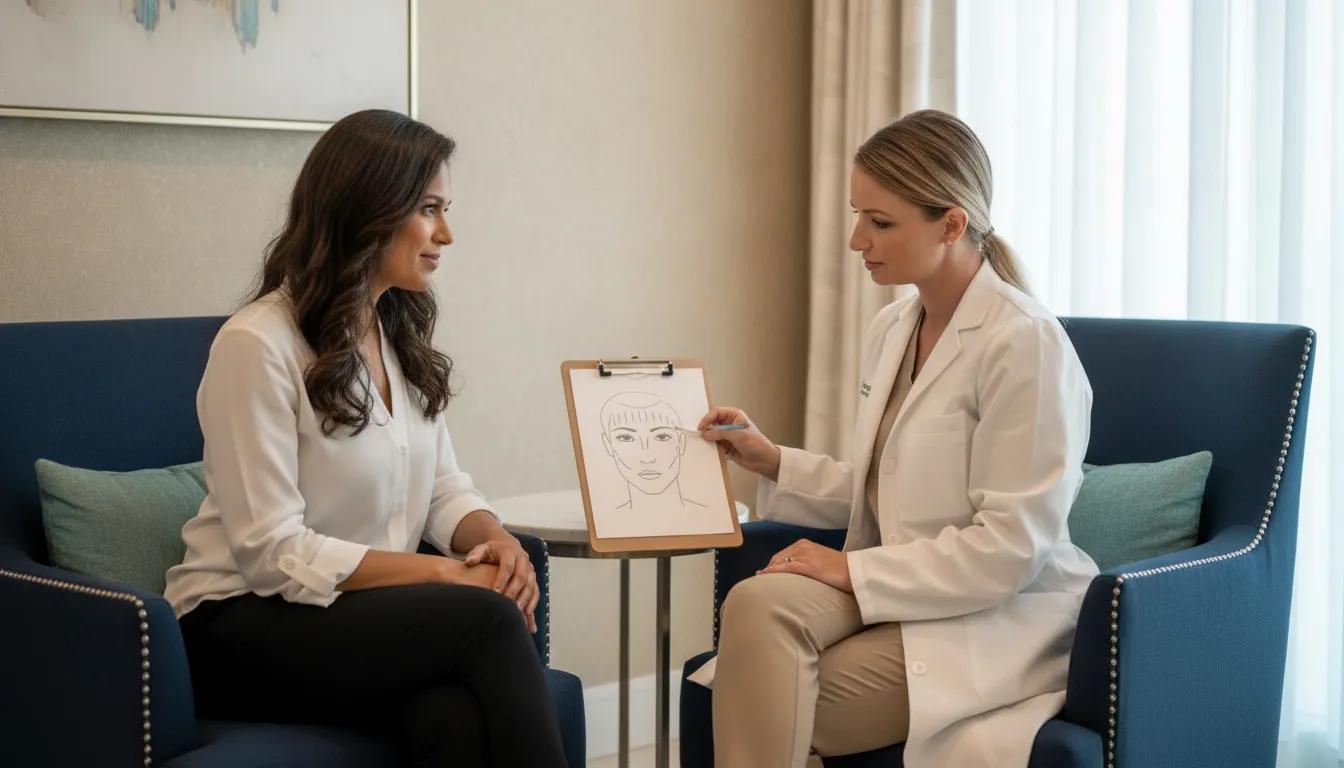

 Aldene McKenzie, D.O.