

 Aldene McKenzie, D.O.
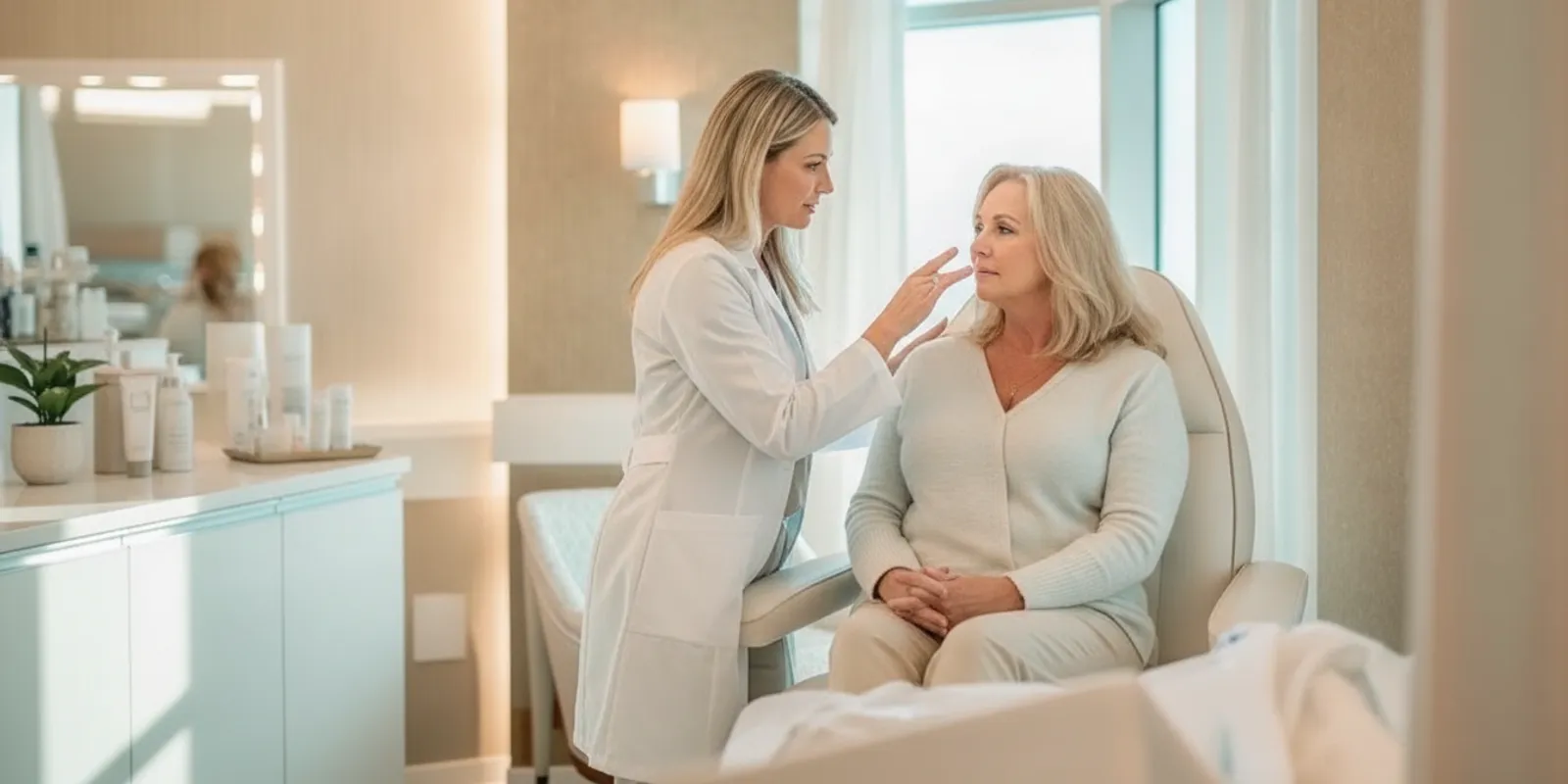
If you are considering Skin Texture Correction Estero, begin with what you actually notice rather than choosing a procedure by name. You may be concerned about skin that feels rough, pores that seem prominent, fine lines, or the appearance of old blemish marks. These are different observations, and they do not automatically point to the same cause or care. A thoughtful consultation starts by clarifying your concern, your priorities, and whether a cosmetic approach is appropriate.
What should Estero patients mean by skin texture?
“Texture” is a convenient everyday word, not a diagnosis. One person may mean an area feels uneven to the touch. Another may mean light catches the cheeks in a way that makes pores or fine lines stand out. Someone else may be describing marks left after blemishes. Even when two people use the same word, their goals and the factors a clinician considers can differ.
Before you book, try describing the concern in one plain sentence. For example: “I notice rough-looking areas on my cheeks,” or “I want to ask about the fine lines I see when I smile.” Then add a few details: where it appears, when you first noticed it, whether it is changing, and what you have already tried. This is more useful than arriving with a treatment name you found online and assuming it must fit.
- Feel: Does an area feel rough, raised, or uneven, or is the concern mainly visual?
- Appearance: Are visible pores, fine lines, or marks the main priority?
- Location: Is it on the cheeks, forehead, another facial area, or several regions?
- Timing: When did you notice it, and has its appearance changed?
- Goal: What specific change would make the conversation worthwhile to you?
Use normal lighting when you assess what you see. Avoid drawing a conclusion from a single close-up image, harsh light, or a filter. If you bring photographs, choose clear images that show the area as you usually see it. A photograph can help you explain your observation, but it cannot replace an in-person evaluation.
How can microneedling fit into a texture consultation?
Microneedling is one option a clinician may discuss in a conversation about skin texture, but the name alone does not establish that it is suitable for you. Kenzi MedSpa’s microneedling information is a useful place to learn what the practice describes and prepare questions. Read it as background, not as a personal recommendation or a reason to self-diagnose.
At a consultation, ask what concern a proposed approach is intended to address and how that recommendation relates to your goals and history. Ask what it may not address, what factors could change the plan, and whether another option or waiting would be reasonable. If your concern appears to need medical diagnosis rather than cosmetic care, ask what kind of evaluation is appropriate before discussing a procedure.
A useful recommendation is individualized. The clinician may need to understand your current skin routine, prior procedures, sensitivities, relevant health history, and expectations. Mention products or medicines you use and any past reaction or recovery experience that you think could matter. You do not have to decide in advance which details are important; share them, then let the clinician explain what is relevant.
Try a short worked example before your visit. Suppose your main concern is uneven-looking cheeks, but you also have an event coming up and cannot take time away from work. State both points. The clinician can explain whether a suggested option addresses the concern, what preparation and aftercare may involve, and whether the timing makes sense. You can then compare that explanation with your schedule instead of treating the procedure label as the whole decision.
What should you compare before deciding?
Compare the reasoning, practical details, and limits of a recommendation, not a treatment label, a social-media image, or a promise of a particular appearance. Use the table as a consultation checklist. It does not recommend treatment or predict an outcome.
| Topic | Questions to ask | What a clear answer helps clarify |
|---|---|---|
| Your concern | What do you think may be contributing to the texture I notice? | Whether your observation has been understood and whether further evaluation is needed. |
| Purpose | What is this approach intended to address for me? | The goal of the recommendation and its limits for your particular concern. |
| Suitability | What details in my history affect whether this is appropriate? | Which personal factors informed the discussion. |
| Alternatives | Are other approaches, routine changes, or waiting worth considering? | Whether there are choices besides proceeding immediately. |
| Visit and recovery | What should I expect during the visit and afterward? | Preparation, aftercare, possible downtime, and practical scheduling needs. |
| Plan and follow-up | How would timing and follow-up be determined? | How next steps may be adjusted rather than assuming one schedule fits all. |
| Cost and logistics | What would the proposed plan cost, and what does it include? | Financial and scheduling details to understand before agreeing to care. |
Listen for an explanation that connects your stated concern to the proposed next step. If an answer is full of unfamiliar terms, ask for everyday language. If the recommendation does not address your main priority, say so and ask how that affects the plan. You do not need to commit while you are still trying to understand the options.
It can help to separate decision questions into three groups. First, suitability: why is this option being considered for me? Second, practical fit: can I follow the preparation and recovery instructions within my schedule? Third, informed choice: what are the limitations, alternatives, cost, and next steps? If one group remains unclear, pause and ask more before deciding.
How can you prepare for an individualized assessment?
A little preparation can keep the conversation focused. Write down your main concern, its location, how long you have noticed it, and what you have already tried. If you do not know the names of your products, bring a list or photographs of their labels. Note previous skin procedures and how you felt your skin responded, including any instructions that were difficult to follow.
- Set a specific goal. Instead of asking for perfect skin, explain the visible or tactile concern you want to discuss. You might say, “I want to understand what could be contributing to the uneven appearance on my cheeks.”
- Share your context. Mention sensitivities, relevant health history, prior care, medicines, and your usual routine. Let the clinician decide which details affect the discussion.
- Explain your constraints. Tell the clinician about travel, work, upcoming events, recovery time, and how much follow-up you can reasonably manage.
- Ask what changes the recommendation. Find out what might lead the clinician to recommend, adjust, postpone, or decline an approach.
- Take notes. Record proposed steps, preparation, aftercare, and follow-up so you can review them later rather than relying on memory.
For instance, if you have used several products without a clear sense of what helped, bring the product names and a simple timeline. Avoid changing everything just before an appointment, because that can make it harder to explain what you have been using. Do not start or stop a product or medicine solely because of general online advice. Ask what instructions apply to you and when to follow them.
If an area is painful, changing quickly, or concerning to you as a health issue, say that clearly. Ask whether a medical evaluation should come before a cosmetic discussion. A cosmetic consultation is not a substitute for evaluation of a medical concern.
How should you think about expectations and safety?
Cosmetic care cannot promise a specific appearance, amount of change, or timeline. Skin response and the appropriate plan vary by person. Ask what a treatment is designed to do, what it may not address, what risks or limitations apply, and how the clinician would decide whether another step should be discussed. Be cautious about any conversation that treats a particular result as certain or pressures you to purchase a package before you understand the recommendation.
The American Academy of Dermatology is a professional medical association with general information about skin health at aad.org. General educational material cannot determine whether a specific cosmetic procedure is appropriate for you. Use it as background, then bring your personal concern and questions to a qualified clinician.
When comparing care settings, ask who evaluates you, who performs any treatment, what oversight applies, and how questions are handled afterward. Kenzi MedSpa describes its practice and physician-led approach on its provider information page. Ask directly about the person responsible for your care and the follow-up process rather than inferring details that have not been explained.
How can Estero patients plan for care in Naples?
Kenzi MedSpa is in Naples, so readers coming from Estero should include travel and possible follow-up in their comparison. The Estero area guide offers local context, and the contact page is a place to ask about arranging a consultation. Confirm current appointment details directly rather than assuming availability or timing.
Before scheduling, plan the visit without assuming treatment will happen that day. Allow enough time to arrive without rushing, and ask whether any preparation instructions apply. If an approach is recommended, clarify how many visits might be discussed, what determines timing, and whether the clinician expects any interval between steps. Do not arrange your calendar around a treatment series until the recommendation is clear.
Travel planning is part of suitability in a practical sense. If you are driving from Estero, consider whether you can return for any suggested follow-up and whether your work or caregiving schedule allows flexibility. If those constraints are substantial, tell the clinician early. That information can shape a realistic conversation about options and timing; it is better to identify it before agreeing to a plan than after.
For broader context, Kenzi’s skin and body treatment information describes services across the practice. Its LED light therapy information is another page readers may review where relevant. These pages are not a substitute for an assessment and do not mean that every service is suitable for every texture concern. Keep your questions focused on your own goal rather than trying to compare every service at once.
What questions are patients likely to ask?
Does skin texture mean I need microneedling?
No. “Texture” is a broad description, not a diagnosis or automatic reason to have a procedure. Explain what you see or feel and ask whether microneedling is relevant, whether another approach is worth discussing, or whether no procedure is recommended.
Can I choose a treatment before the consultation?
You can read about services and prepare questions, but information on a service page or another person’s experience cannot determine your individual plan. Ask about purpose, limits, recovery, and alternatives before deciding whether to proceed.
How many visits will I need?
There is no schedule that applies to every person and concern. Ask how timing would be determined, what factors could change it, and how the clinician would review the plan. Treat any suggested number of visits as a discussion point, not a promise about outcome.
What if I am unsure after the appointment?
You can take time to review what you heard and ask additional questions before agreeing to care. A clear discussion should leave you able to explain the proposed next step, relevant limitations, costs, and follow-up in your own words.
What is a sensible next step?
For Skin Texture Correction Estero, start with a focused description of what you notice and what you hope to discuss. Review the microneedling service information, bring your questions, and ask for a personalized explanation of suitability, alternatives, practical details, and limits. A considered decision begins with understanding the recommendation, not assuming one treatment is right for everyone.
Related Articles
 Skin & Body TreatmentsMicroneedling Fort MYERS GuideConsidering microneedling near Fort Myers? Use this practical guide to compare provider communication, prepare for a consultation, and plan your next step.
 Aldene McKenzie, D.O.
 InjectablesBotox Old NAPLES GuideConsidering Botox in Old Naples? Prepare for a consultation with questions about goals, health history, oversight, alternatives, cost, and expectations.Aldene McKenzie, D.O.
 Skin & Body TreatmentsLaser Hair Reduction Estero GuideLaser Hair Reduction Estero guide: plan a Naples visit, compare areas, and learn sun, aftercare, and session limits before you book.Aldene McKenzie, D.O.
New Posts, Delivered Monthly
Get patient-education articles and the current monthly special in one short email. No spam.
Ready When You Are
Book Your Consultation With  Dr. McKenzie
Personalized recommendations, honest guidance, and a treatment plan built around what you actually want, not what's easiest to sell.